Plateau vs standard oxygen concentrators
Two units can both be rated 93% purity and 5L flow, yet the one that performs normally in Chengdu may deliver 80% and 3L in Lhasa. That is physics, not a quality defect - and closing that gap is precisely what a plateau concentrator is for.
1. The difference starts with intake air
A concentrator compresses air and passes it through a molecular sieve, where zeolite preferentially adsorbs nitrogen to enrich oxygen. Every 1,000 m of altitude reduces atmospheric pressure by roughly 11%, so the number of oxygen molecules per unit volume of air falls with it.
At 3,650 m, pressure is about 65% of sea level. With the same compressor and the same running time, roughly a third less oxygen enters the sieve bed - so output falls.
2. Three technical responses
Custom oil-free compressor: higher intake volume and pressure compensation to keep the sieve bed at working pressure despite low ambient pressure
Altitude-specific control curve: recalibrated flow-to-purity mapping so raising the setting does not collapse purity
Cold-start package: plateau winters routinely drop below -15C, where ordinary lubricants thicken and starting becomes hard
3. Measured differences
Standard lowland unit at 3,650 m: purity commonly 75-85%, usable flow reduced
Plateau unit at 3,650 m: purity held at 93%+/-3%, flow delivered as rated
Environmental range: lowland units commonly 0-40C; plateau units cover cold-start conditions
4. Construction and reliability
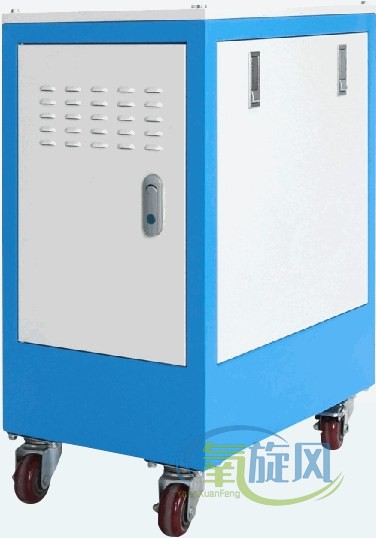
Outdoor-installable: plateau units are weatherproofed for outdoor or semi-outdoor mounting, cutting indoor noise and footprint
Serviceable layout: filters and molecular sieve replaced without dismantling the unit
Plateau stationary units commonly sit in the 650VA-1100VA band, covering 0-10L and 0-20L
5. How to tell a genuine plateau unit
Does it state a specific altitude range rather than a vague "suitable for altitude"
Does it provide measured purity data at altitude (above 3,000 m)
Does it describe the compressor configuration rather than just "imported compressor"
Are there real plateau delivery cases - hotels, camps, clinics
6. Our plateau models
NS-10 (0-10L / 650VA) and NS-20 (0-20L / 1100VA): custom oil-free compressor, cold start, weatherproof, outdoor-installable
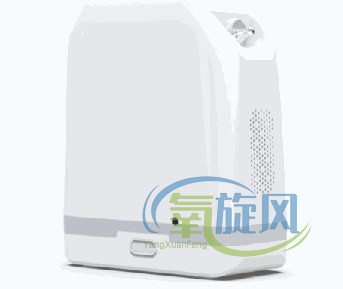
RS series medical portable: 0-5000 m adaptive, 1.7kg host with touchscreen and five safety alarms
VPSA 5L sleep oxygen tent: 33dB, designed for continuous nightly operation at altitude
Frequently asked questions
- Can a lowland concentrator be used in Lhasa?
- Yes, but purity and effective flow will drop - a unit rated 93% on the lowland commonly measures 75-85% in Lhasa. Acceptable for occasional short sessions; for long-term or medical use, switch to a plateau-tuned model.
- Above what altitude is a plateau model needed?
- There is no hard threshold. Visible purity loss usually appears above 2,500 m, a plateau model is advisable above 3,000 m, and above 3,500 m (Lhasa, Shigatse) it is effectively essential.
- Are plateau units noisier?
- No. Higher-flow units have more powerful compressors so absolute noise can be slightly higher, but mainstream models use acoustic treatment to stay near 45dB for home stationary units. The VPSA sleep tent uses a low-speed design and reaches 33dB.
- Do plateau units have a shorter service life?
- The opposite. Running a lowland unit at full load on the plateau pushes the compressor away from its design point and accelerates overheating wear. Plateau units are designed for low-pressure conditions, so they operate closer to design point, and quality hosts exceed 20,000 hours.